The World Wetlands Day 2026 national celebrations was held on 2nd February, 2026 at Merire Wetland in Isiolo County.
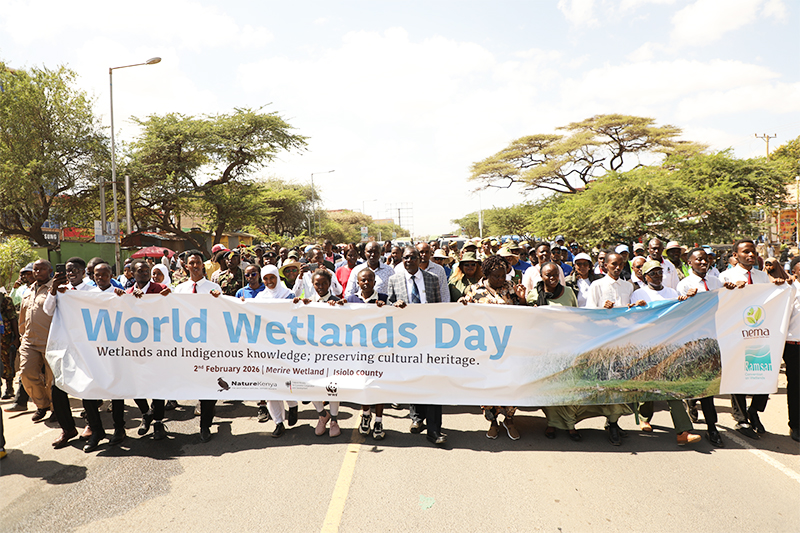
World Wetlands Day 2026 procession across Isiolo town during the commemorations at Merire Wetland
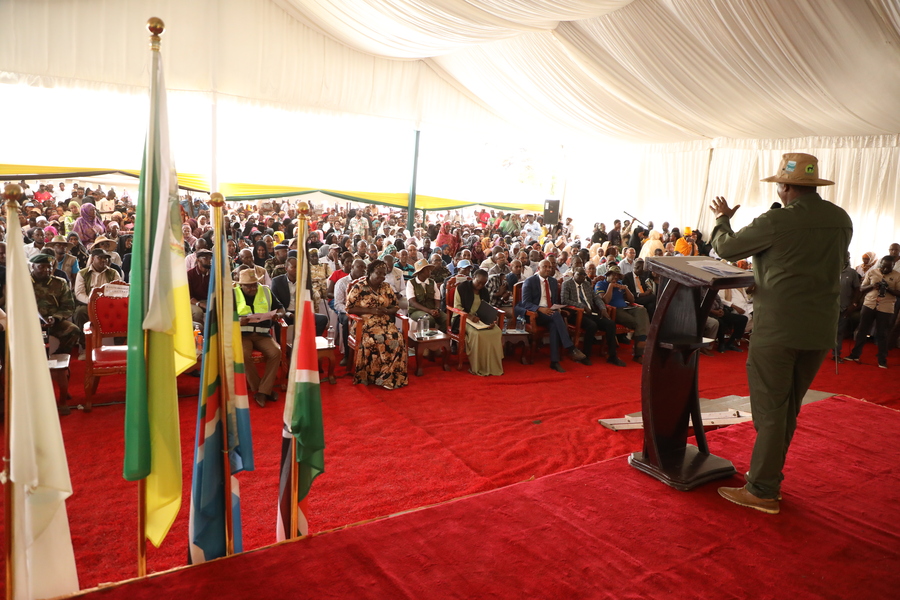
NEMA Director General Dr. Mamo B. Mamo, EBS making his remarks during the World Wetlands Celebrations at Merire Wetland in Isiolo.
The Chief Guest was CS Environment, Climate Change and Forestry, Dr. Deborah Barasa, EGH accompanied by Hon. Beatrice Askul, CS Ministry of EAC, ASALs and Regional Development, Isiolo Governor, Hon. Abdi Guyo, NEMA Board led by Chairman, Mr. Emilio Mugo and Director General, Dr. Mamo B. Mamo, EBS among heads of other institutions.
The event was held under the theme, “Wetlands and Traditional Knowledge: Celebrating Cultural Heritage,” emphasizing the integration of indigenous knowledge with modern scientific practices to enhance wetland resilience and cultural heritage preservation.
The CS called for cooperation and contribution by all actors in safeguarding wetlands and the environment in general. ” Wetlands restoration efforts each of the actors is undertaking are expected to yield immense benefits in the long term such as contribution to the attainment of the 15 billion trees national target by 2032; improved wetlands ecological integrity; as well as improved provision of ecosystem services among other benefits,” CS Barasa stated. She assured stateholders that her Ministry will continue to put in place and enforce necessary measures to ensure that wetland resources are restored and protected from further degradation and loss.
NEMA Chairman, Emilio Mugo stated that Kenya boasts of diverse wetlands that provide essential ecosystem services. Merire Wetland is one of the 30 wetlands in Isiolo County. They serve as natural water reservoirs and biodiversity hotspots that need protection and sustainable management. He urged the locals to conserve the wetlands to enhance water security and agricultural sustainability. The Chairman was speaking during the World Wetlands Day 2026 national celebrations.
NEMA DG Dr. Mamo B. Mamo, EBS stated that NEMA is actively involved in the conservation, restoration, and sustainable management of wetlands, including developing and enforcing policies and regulatory frameworks for wetland protection.
The DG added that there is a pressing need to implement wetland conservation strategies within national and county development planning to prevent further degradation and promote ecosystems health to advert climate change related risks.
The CS also launched the Carbon Markets community guide. The guide has been developed by NEMA in partnership with Wild Wide Fund for nature (WWF). It will help the communities to understand issues around carbon markets trading and conservation. She also awarded various environmental conservation groups for their efforts in environmental protection within Isiolo County.
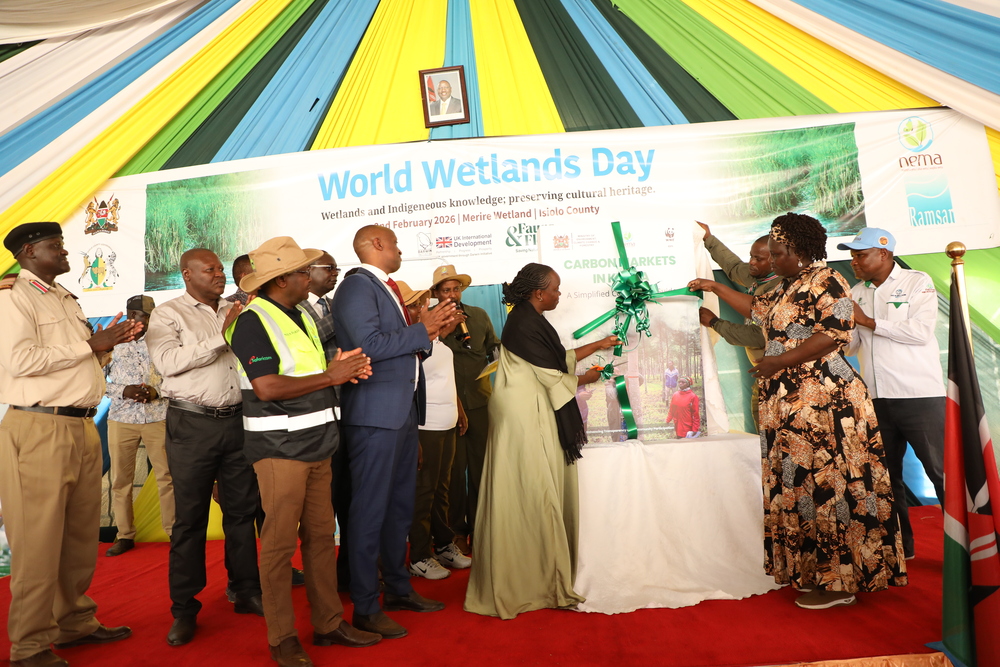
Environment, Climate Change and Forestry CS Dr. Deborah Barasa accompanied by CS Ministry of EAC, ASAL and Regional Development Beatrice Askul among other leaders launch for the Carbon Markets Community Guide during the celebrations
MERIRE WETLAND IN ISIOLO COUNTY
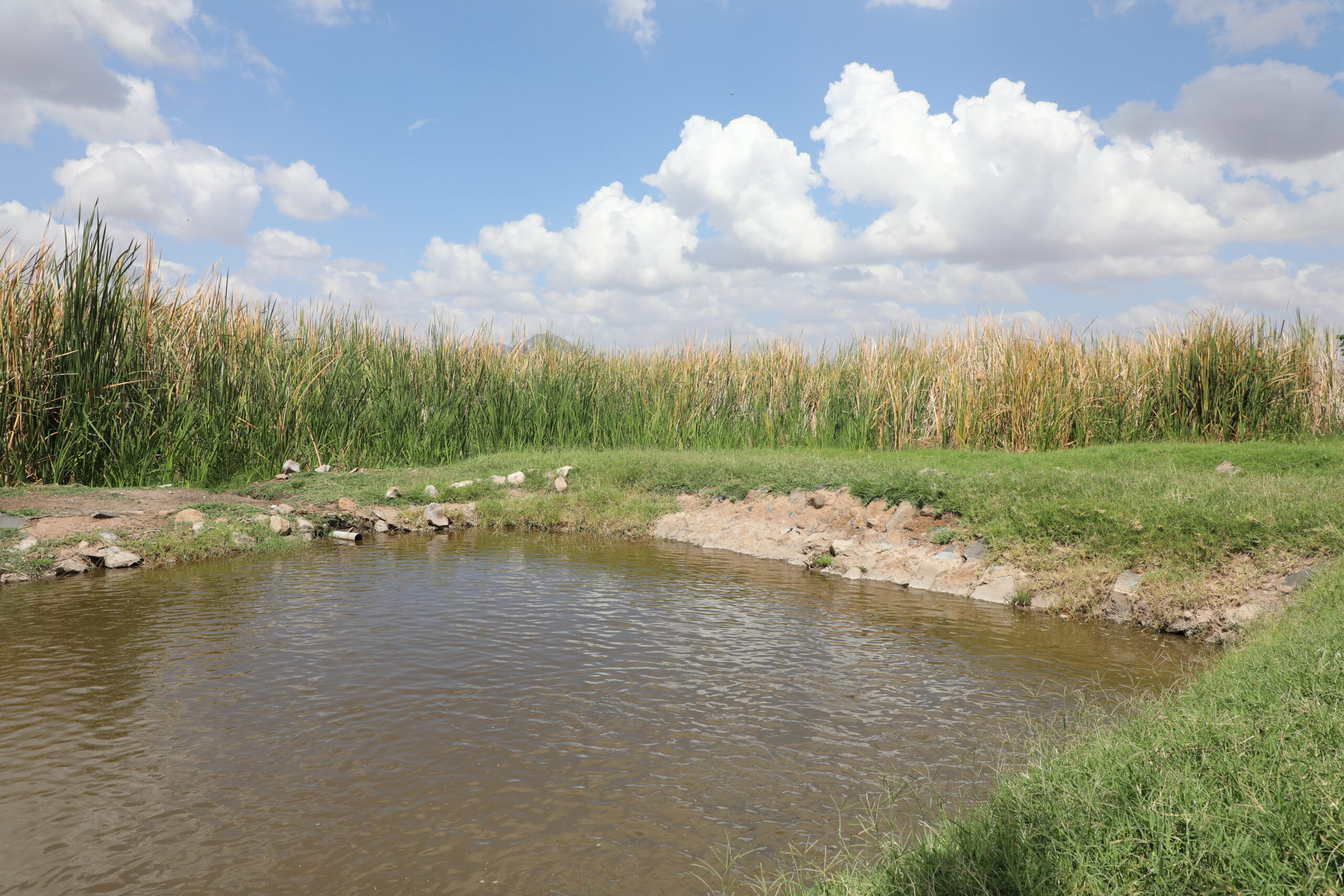
Merire Wetland is located within the Fisheries Department compound at the heart of Isiolo Town, Isiolo County. The Fisheries compound covers approximately 2.7 hectares (about 7 acres), of which the wetland occupies an estimated three-quarters of an acre. Despite its relatively small size, the Merire Wetland is an ecologically important natural resource that significantly contributes to fisheries development, biodiversity conservation, and environmental sustainability within the urban setting of Isiolo.
The wetland supports a rich diversity of wetland vegetation, including water lilies, cattail vegetation (Typha spp.), sedge grasses, and other indigenous aquatic and semi-aquatic plant species. These plants play a vital role in water filtration, soil stabilization, and provision of habitat for various forms of life.
The wetland ecosystem is also home to a variety of wildlife species such as monitor lizards, wild fish species, resident and migratory birds, amphibians, and small rodents. This biodiversity highlights the wetland’s role as a refuge for wildlife within an increasingly urbanized environment.
A key feature of the Merire Wetland is a natural spring, which serves as a reliable and sustainable source of water for fisheries activities within the compound. The Fisheries Department has partially developed the area, establishing 13 earthen fish ponds and 3 concrete fish holding ponds, alongside a fish hatchery unit dedicated to fish breeding and fingerling production. The wetland plays a critical role in supplying water throughout the year to these facilities, ensuring continuity of fish farming and hatchery operations even during dry seasons.
Beyond fisheries production, Merire Wetland provides important ecosystem services including groundwater recharge, flood regulation, micro-climate moderation, pollution buffering, and environmental education opportunities. As such, it contributes not only to food security and livelihoods but also to urban environmental resilience.