Our Services: Other Services

NEMA has an Incident Management Policy that outlines how the Authority will increase and enhance its capacity, in partnership with other lead agencies, to manage environmental incidents hazards that may lead to disasters NEMA has developed an incident management system using a risk-based classification system and raising awareness amongst staff and partner organizations.

NEMA has initiated and evolved procedures and safeguards for the prevention of accidents which may cause environmental degradation and evolve measures where accidents and incidents occur.

Report Environmental Incidences on:

Line: 0786 101 100, or 0741 101 100
Email: incidence@nema.go.ke

FAQs ON INCIDENTS MANAGEMENT. SEE HERE

Common environmental incidents that can lead to disasters in Kenya include:

  1. Foam on Mbagathi Road during the long rains
  2. Oil spills in rivers and ocean
  3. Forest fires
  4. Severe drought leading to distress of flora and fauna
  5. Dumping of solid waste in undesignated areas
  6. Unlicensed Effluent discharges to the river
  7. Unlicensed Water abstraction
  8. Smoke, fumes and odours
  9. Light nuisance
  10. Noise nuisance
  11. Fire accidents
  12. Landslides
  13. Floods
  14. Sewage burst
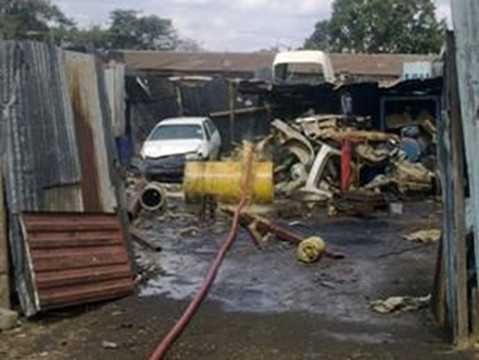
Shauri Moyo gas leak
Shauri Moyo Gas Leak


At least 20 people have been rushed to hospital after a gas leak in Shauri Moyo, Nairobi.

NEMA defines an incident as a specific event which is brought to the attention of the Authority, is within the Authority’s areas of responsibility and may have an environmental/operational impact. Incidents that may have resulted in environmental damage. This may include damage to water courses, land and emissions to the air. NEMA works to prevent and combat future environmental threats based on early risk assessments by facilitating access to relevant environmental data for decision-making through monitoring, analyses and reports on the state of environment and trends. NEMA has developed an incident classification scheme to assess incidents according to impact to NEMA resources and the environment.

Incident Recording and Allocation

NEMA will maintain a dedicated incident reporting telephone line that is be separate from the normal telephone lines used. The telephone line is on an Incident Desk that is covered during the normal working day between 8am and 5pm. Outside of those hours an automatic telephone answering service is provided on that dedicated line. Officers from the Compliance and Enforcement Team man the Incident Desk between 8am and 5pm on normal working days. The duties of the officer include:

  1. Receive incidents reported to the Authority.
  2. Record reported incidents in the Incidents Register. (See Annex 1)
  3. Classify the incident according to the National Incident Classification Scheme.
  4. Allocate resources to respond appropriately to the incident.
  5. Maintain and update the Incident Register.
  6. Close incidents when investigations are complete or where a prosecution file is commenced.
  7. Feedback the results of the investigations to the person reporting the incident, unless they have requested no further contact.

Details of persons who report incidents to the Authority will not be disclosed outside of NEMA under any circumstances. The Duty Officer will also act as a focal point for all media inquiries in respect of incidents reported to the Authority. NEMA has established the system to manage incidents in the longer term to ensure that appropriate follow up action is completed with the aim of improving environmental performance.
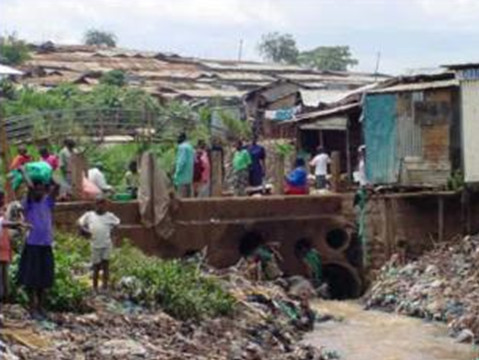
Dumping waste into rivers can cause environmental disasters report such cases
NEMA produces an annual State of the Environment (SoE). Environmental reporting entails the production and dissemination of an annual report that provides a status report on various environmental issues in a given period.


Click here to download SoE Reports                                                                  

Standard of Service
The report is produced annually.

Cost of Service
State of Environment Reports are sold at Kshs. 1,200 per copy.

Customer Obligation
Customers can obtain a copy of the SoE report from the NEMA Headquarters or borrow a copy from our resource centers country wide.

Environmental Capacity Building (EIA)

NEMA offers knowledge and skills support to all stakeholders on environmental conservation with special emphasis on environmental laws, policies and regulations in Kenya. The website allows us to extend our services to the wider Kenyan community.? This site is particularly useful to learning institutions that wish to train/teach on environmental issues.

On this site you will find information about the NEMA capacity building programes and documents.? These include short courses offered such as Basic Enforcement Course for NEMA staff and Lead agencies as well as EIA/EA Reviewers course.

Compliance Promotion
Following? the enactment of EMCA 1999, NEMA through the Minister or Environment and Mineral Resources has gazetted several regulations to operationalise? the Act. These regulations provide specific activities to be undertaken to help developers to protect the environment as they carry out their activities.

EMCA 1999 and its subsidiary regulations:

  • EMCA (1999)
  • EIA/EA Regulations
  • Waste Management Regulations
  • Biodiversity and Benefit Sharing
  • Ozone Depleting Substances
  • Water Quality Regulations
  • Noise Pollution Regulations
  • Wetlands and riparian Regulations

The following are regulations in draft

  • Air Quality Regulations
  • E-Waste Regulations
  • Chemicals Regulations
  • Waste tyres Regulations

Courses offered by NEMA
NEMA operations require decision making on key technical aspects of the environment. Capacity building for all stakeholders working with NEMA is essential. In this regard, NEMA has developed diverse curricula to be used in capacity building internally and by other training institutions.
In 2004, NEMA in collaboration with other stakeholders developed the EIA/EA training curriculum to guide training institutions in capacity building for EIA/EA experts. All experts are expected to have gone through this curriculum to be registered as an EIA/EA expert.
Training institutions are expected to apply to NEMA to be authorized to offer EIA training.

The applying institutions must fulfill the following conditions.

  • Be a recognized training institution by Ministry of Education or the Directorate of Technical Training
  • Possess 5 qualified staff who must be fully registered EIA experts
  • Demonstrate capacity in terms of training infrastructure
  • Pay Kshs. 20,000 as fee for using the NEMA curriculum.

The revised EMCA (1999) intends to make it mandatory for all policies, programs and projects to undertake Strategic Environmental Assessment (SEA). NEMA has developed the SEA curriculum but has so far not authorized any institution to offer this course. Anyone interested in training on SEA should get in touch with NEMA for further guidance.?

To address other needs for environmental experts, NEMA is also offering the following courses in-house.

  • EIA Experts Refresher Course ? for EIA experts
  • EIA Reviewers Course ? for EIA experts from lead agencies
  • Basic Enforcement Course ? for Environmental Laws Enforcement Agencies
  • Principles of Environmental Compliance and Enforcement ? for Environmental Laws Enforcement Agencies
  • Mainstreaming of Environment and Sustainability?- for Ministries, Departments and Agencies (MDAs)
  • Education for Sustainable Development ? for educators
  • For more information on how to participate in any of these courses, kindly contact the Department of Environmental Education, Information and Public Participation.